A leaking roof is one of the most stressful problems a homeowner can face. Water coming through a ceiling or running down an internal wall needs dealing with quickly, and the steps you take in the first hour can make a significant difference to how much damage is done.
This guide explains exactly what to do when your roof starts leaking in Brigg, Scunthorpe, or the wider North Lincolnshire area, how to limit the damage while you wait for a roofer, and when a leak counts as a genuine emergency.
What Counts as a Roofing Emergency?
Not every roofing problem needs an immediate call-out. A single slipped tile with no water ingress can usually wait for a scheduled repair. However, the following situations should be treated as emergencies:
- Active water coming through a ceiling or internal wall
- A section of roof covering that has been blown off or displaced
- Visible daylight through the roof from inside the loft
- A sagging or bulging ceiling, which suggests water has pooled above it
- Storm damage that has left the roof structure exposed
- Water ingress near electrical fittings, consumer units, or light fixtures
If any of these apply, act straight away.
Step 1: Make the Area Safe
The first priority is safety, not the roof. If water is coming in near light fittings, sockets, or anything electrical, turn off the power to that circuit at the consumer unit. Water and electricity are a serious hazard and this takes priority over everything else.
Keep people and pets away from any sagging ceiling. A ceiling holding pooled water can collapse without warning.
Step 2: Contain the Water
Once the area is safe, limit the damage. Place buckets, bowls, or a large container under the leak to catch the water. Lay towels or old sheets around the container to absorb splashes.
Move furniture, electronics, and anything of value out of the affected area. Lift carpets or rugs if water is reaching the floor. If water is pooling behind a ceiling and causing a visible bulge, it is often better to release it in a controlled way with a small hole using a screwdriver, positioned over a bucket, rather than allowing the ceiling to fail entirely. Only do this if it is safe to reach and you are confident there is no electrical risk.
Step 3: Do Not Climb on the Roof
This is important. A wet roof is extremely slippery, and a roof that has been storm damaged may be structurally unsound. Every year homeowners are seriously injured attempting to inspect or patch their own roof in poor conditions. Leave the roof to a professional with the correct equipment and training.
Step 4: Document the Damage
Take photographs and video of the damage from inside the property, including the ceiling, walls, any affected belongings, and the loft space if it is safe to access. Photograph the exterior from ground level using your phone's zoom if you can see visible damage from below.
This documentation is valuable for two reasons. It gives your roofer useful information before they arrive, and it supports any insurance claim you decide to make.
Step 5: Call a Local Roofer
Call a roofer who covers your area and can attend promptly. Describe clearly what you are seeing, when it started, and whether the leak is active. A responsive local roofer will be able to advise over the phone whether the situation needs immediate attendance or can be scheduled.
JM Roofing provides emergency roof repairs across Brigg, Scunthorpe, and the surrounding North Lincolnshire area. Call us on 07979 811001 and we will get to you as quickly as we can.
Step 6: Contact Your Insurer
If the damage is significant, notify your home insurer as soon as practical. Most policies cover storm damage and the resulting water damage to the interior, though wear and tear on an ageing roof is usually excluded.
Your insurer will want details of what happened, when, and photographs of the damage. They may also want a report from a roofing professional. We are happy to provide detailed written reports and photographs to support a claim.
What a Roofer Will Do on an Emergency Call-Out
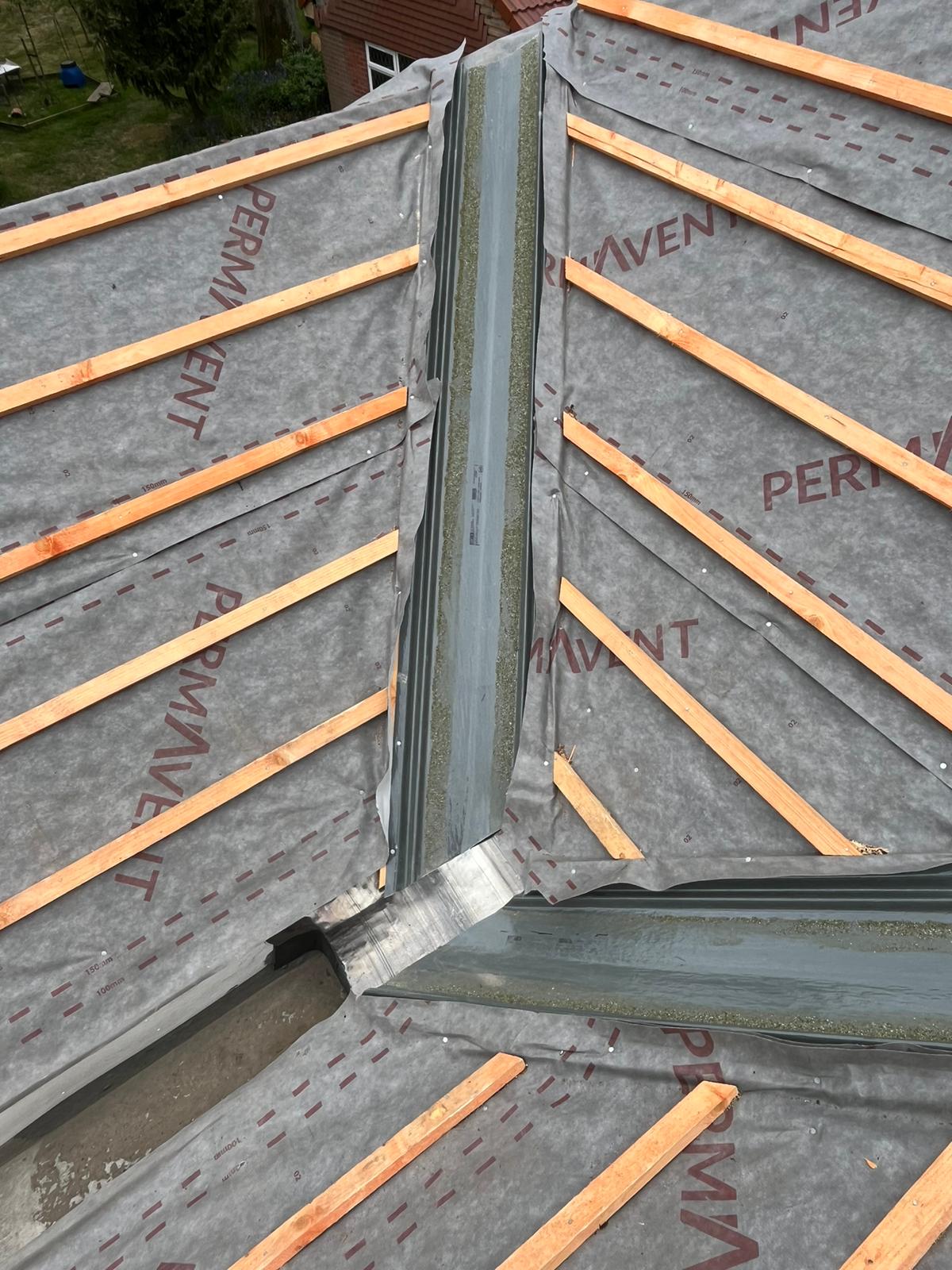
When we attend an emergency roof leak, the first job is to stop water getting in. Depending on the nature of the damage, that might involve refixing or replacing displaced tiles or slates, sealing or replacing failed flashing, clearing a blocked gutter or valley that is forcing water back under the covering, or fitting a temporary weatherproof covering to an exposed area until a permanent repair can be carried out.
Once the property is watertight, we carry out a full inspection to identify the underlying cause and provide a written quote for the permanent repair. We never carry out additional work without agreeing it with you first.
Common Causes of Roof Leaks in North Lincolnshire
The most frequent causes we see across Brigg and Scunthorpe include slipped, cracked, or missing tiles and slates, failed or lifted lead flashing around chimneys and abutments, deteriorated mortar on ridge and hip tiles, blocked gutters and valleys causing water to back up under the roof covering, perished felt or underlay on older roofs, and damage to flat roof coverings on extensions and garages.
Many of these issues develop gradually and become apparent only when heavy rain or wind exposes them. Regular inspections catch them before they become emergencies.
How to Prevent Emergency Roof Leaks
The most effective way to avoid an emergency is a periodic roof inspection, particularly before winter. Keeping gutters clear, replacing individual damaged tiles promptly, and having flashing and ridge mortar checked every few years dramatically reduces the risk of a sudden failure.
JM Roofing offers free no-obligation roof inspections across Brigg and Scunthorpe. If you have not had your roof looked at in several years, it is worth booking one in.
Get Emergency Roof Repair in Brigg and Scunthorpe
If your roof is leaking right now, call JM Roofing on 07979 811001. We cover Brigg, Scunthorpe, and the surrounding North Lincolnshire area, and we will always inspect the roof properly before quoting for any repair. You can also get in touch through our contact page.
Frequently Asked Questions
What should I do if my roof is leaking in Brigg?
Turn off electricity to any affected circuit, contain the water with buckets and move valuables clear, avoid climbing on the roof, photograph the damage, and call a local roofer. JM Roofing covers emergency roof repairs across Brigg and Scunthorpe on 07979 811001.
Is a leaking roof an emergency?
Active water coming through a ceiling, displaced roof coverings, visible daylight through the roof, a sagging ceiling, or water near electrical fittings should all be treated as emergencies and dealt with promptly.
How quickly can JM Roofing attend an emergency roof repair in Scunthorpe?
We aim to attend genuine emergencies as quickly as possible across Brigg, Scunthorpe, and the surrounding area. Call 07979 811001 and we will advise on timing straight away.
Will my insurance cover a roof leak in North Lincolnshire?
Most home insurance policies cover storm damage and the resulting interior water damage, but not general wear and tear on an ageing roof. Document everything with photographs and notify your insurer as soon as possible.
Can I fix a roof leak myself?
We strongly advise against climbing on a wet or storm damaged roof. It is extremely slippery and may be structurally unsound. Containing water inside the property is helpful, but the roof itself should be left to a professional.
What causes most roof leaks in Brigg and Scunthorpe?
The most common causes are slipped or missing tiles, failed lead flashing, deteriorated ridge mortar, blocked gutters and valleys, perished underlay on older roofs, and damage to flat roof coverings.
How much does an emergency roof repair cost in North Lincolnshire?
Cost depends entirely on the nature and extent of the damage. We always inspect the roof before quoting so you get an accurate price rather than a rough estimate.
How do I stop a roof leak getting worse before the roofer arrives?
Contain the water with buckets, move belongings clear, isolate electrics in the affected area, and keep away from any sagging ceiling. Do not attempt to access the roof yourself.