Most roof problems do not announce themselves dramatically. They start small, develop quietly over weeks or months, and only become obvious once water has already found its way into the structure of your home. By that point, what could have been a straightforward repair has often become something considerably more involved.
The good news is that roof damage almost always gives homeowners warning signs before it reaches that stage. Knowing what to look for, and acting on it promptly, is the single most effective way to protect your home and avoid unnecessary repair bills.
At JM Roofing, we carry out roof repairs and inspections across Brigg, Scunthorpe, and North Lincolnshire every week. These are the seven signs of roof damage that we see most commonly, and that homeowners most often wish they had acted on sooner.
Sign 1: Damp Patches or Water Stains on Ceilings
A brown or yellow stain spreading across an upstairs ceiling is one of the clearest indicators that water is entering from above. It does not always mean the leak is directly above the stain, however. Water can travel along timbers and roof felt for some distance before it drips through, which means the entry point can be several metres from where the stain appears.
Even a small, faint stain is worth investigating promptly. What looks like a minor damp patch on the surface often indicates that water has been getting in for some time. The longer it is left, the more likely it is that timbers, insulation, and ceiling materials will be affected.
If you spot ceiling staining, do not wait for it to get worse before calling a roofer. Get in touch with JM Roofing for a free roof inspection and we will find the source.
Sign 2: Missing, Cracked, or Slipped Tiles
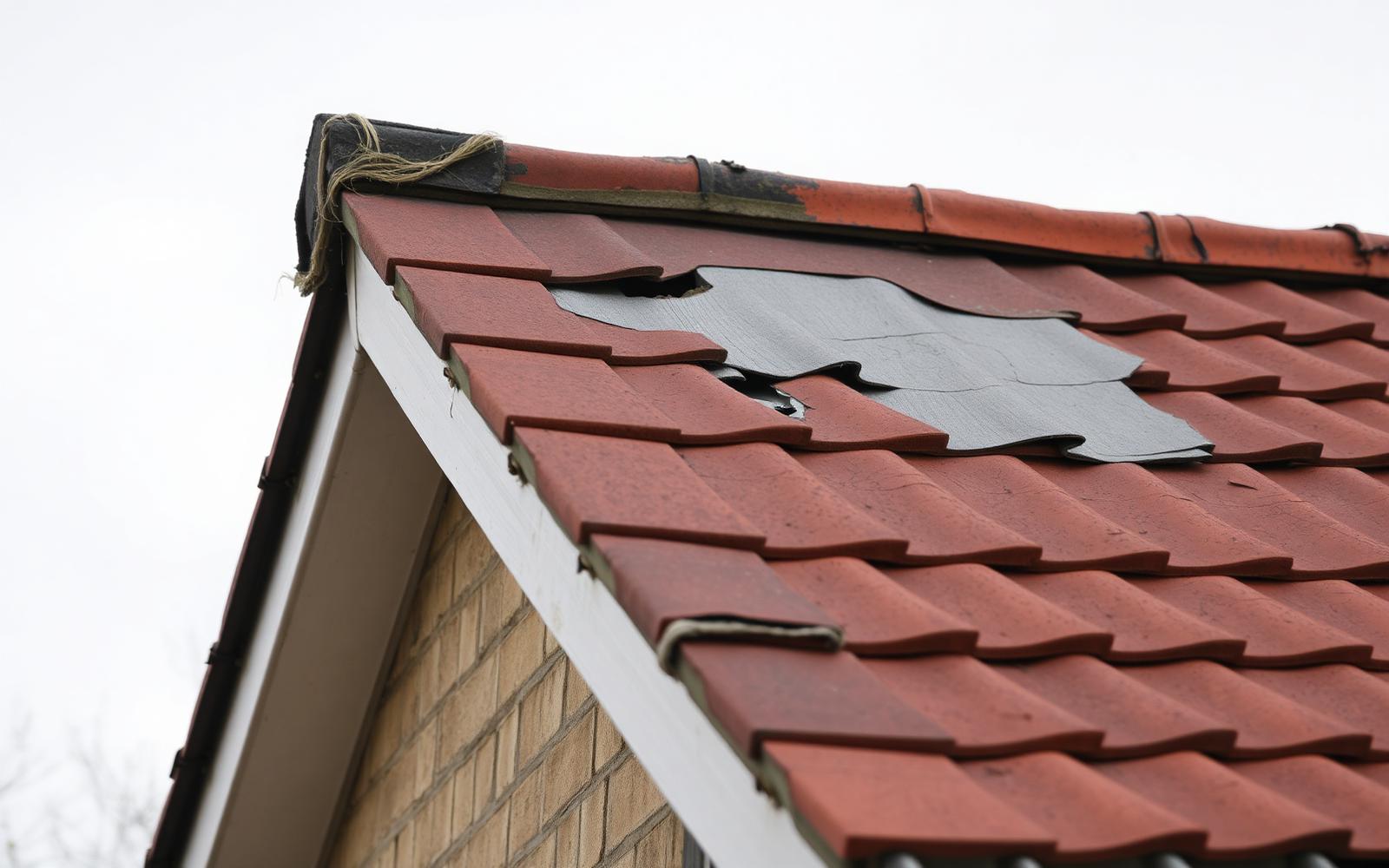
Individual tile failures are one of the most common forms of roof damage we attend across Brigg and Scunthorpe. Tiles can slip out of position in high winds, crack under the weight of frost or debris, or simply reach the end of their useful life on older roofs.
A single missing or cracked tile leaves the felt underlay exposed to the weather. In the short term this may not cause a leak, but felt is a secondary line of defence, not a primary one. UV exposure, rain, and frost will deteriorate exposed felt relatively quickly, and once the felt fails, water has a direct route into the roof structure.
You can often spot missing tiles from the ground, particularly on a sunny day when the light reflects differently through the gap. A pair of binoculars is useful for a closer look without the need to get up high.
Any missing or cracked tiles should be replaced as soon as possible. A single tile repair is usually a quick, affordable job that takes a matter of hours. Leaving it can lead to a far more expensive outcome.
Sign 3: Loose or Failed Ridge Tiles
Ridge tiles run along the very top of the roof where two slopes meet. On older properties across Brigg and North Lincolnshire, these are typically bedded in sand and cement mortar. Over time, this mortar cracks and crumbles as the roof moves with temperature changes, allowing ridge tiles to loosen and eventually fall.
A loose ridge tile is a significant safety risk as well as a roofing concern. It can fall from height without warning, causing damage to whatever is below it. It also leaves the ridge open to water ingress, which can affect the timbers and felt in the area below.
The modern solution is a dry ridge system, which uses mechanical fixings rather than mortar to secure ridge tiles. Dry ridge systems are far more durable, require no ongoing maintenance, and eliminate the risk of mortar failure. If your ridge tiles are bedded in mortar and showing signs of movement or cracking, it is worth considering a dry ridge upgrade when they are next attended to.
Sign 4: Sagging or Uneven Roofline
A healthy roof should have a clean, straight roofline when viewed from the street. If you notice dips, waves, or sections that appear to have dropped or shifted, this is a more serious sign that warrants immediate attention.
Sagging can indicate a range of underlying issues including rotted roof timbers, damaged rafters, overloaded or failing supports, or water damage that has weakened the structural elements of the roof. These issues do not resolve themselves and will worsen over time if left unaddressed.
A sagging roofline does not necessarily mean a full replacement is needed. In some cases, targeted structural repairs can address the problem without replacing the entire roof. But it does require a professional inspection to assess accurately, and delaying that assessment generally makes the situation worse.
Sign 5: Damaged or Lifted Lead Flashing
Lead flashing is the metal strip that seals the joints between your roof and vertical surfaces such as chimney stacks, dormer walls, and roof junctions. It is one of the most common sources of leaks on older properties across Brigg and Scunthorpe, and one of the most frequently overlooked by homeowners.
Flashing problems are rarely visible from the ground, which is why many homeowners do not know there is an issue until a damp patch appears inside. Signs that flashing may be failing include:
- Damp patches on walls or ceilings near chimney stacks or dormer windows
- Visible gaps or cracking in the mortar that holds the flashing against the masonry
- Lifting or peeling of the lead itself, particularly at edges and corners
Flashing repairs are a standard part of our roof repair service across Brigg and Scunthorpe. We use like-for-like lead or approved modern alternatives and make sure the repair is done properly so it does not need revisiting every few years.
Sign 6: Moss, Lichen, or Algae Growth
A green tinge on your roof tiles is common on older properties across North Lincolnshire and is not always cause for immediate alarm. However, significant moss or lichen growth is worth addressing for a number of reasons.
Heavy moss growth holds moisture against the tile surface, which accelerates the natural weathering of the tile and increases the risk of frost damage in winter. Moss can also work its way under tiles at the edges and ridges, lifting them slightly and creating gaps for water to enter. When moss is washed off by rain, it accumulates in gutters and can cause blockages that lead to further water damage.
Moss removal should always be done carefully and with the right methods. Pressure washing a roof can dislodge tiles, damage old mortar, and strip protective coatings. If your roof has significant moss growth, a professional assessment will establish the best approach and identify any underlying tile or mortar damage beneath the growth.
Sign 7: Overflowing or Damaged Gutters
Gutters are part of your roof drainage system and are directly connected to the health of your roof. When gutters block, overflow, or pull away from the fascia boards, the consequences can spread further than most homeowners expect.
Overflowing gutters direct water down the outside walls of your property, leading to damp penetration, damage to brickwork and pointing, and in some cases water getting back under the roof edge. Fascia boards that are rotted or damaged can no longer support the guttering system properly, which leads to further movement and potential failure.
Common signs that your gutters need attention include water cascading over the gutter edge during rain, visible sagging or separation from the fascia, plant growth inside the gutter channel, and damp patches on external walls below the gutter line.
We can assess and repair guttering as part of a wider roof inspection across Brigg and Scunthorpe, and can replace fascias and soffits alongside any roofing work.
What to Do If You Spot Any of These Signs
The most important step is not to leave it. Every one of the seven signs listed above is more straightforward and less expensive to address when caught early. Waiting until a small problem becomes a big one consistently results in higher costs and more disruption.
JM Roofing provides free, no-obligation roof inspections across Brigg, Scunthorpe, and the wider North Lincolnshire area. We will carry out a proper inspection, give you an honest assessment of what we find, and provide a clear written quote before any work begins.
Book Your Free Roof Inspection or call us on 07979 811001
You can also read more about our roof repair services or browse our projects page to see recent work completed across the area.
Frequently Asked Questions
What are the most common signs of roof damage in Brigg?
The most common signs we see across Brigg and Scunthorpe are damp patches on ceilings, missing or cracked tiles, loose ridge tiles, sagging rooflines, failed lead flashing, significant moss growth, and overflowing gutters. Any of these warrants a professional inspection.
How do I check my roof for damage without getting on it?
You can carry out a basic visual check from the ground using binoculars, looking for missing tiles, displaced ridge tiles, and any visible sagging or unevenness. Also check your loft space for daylight, damp patches on timbers, or a musty smell. A professional inspection will give you a thorough assessment of areas that are not visible from ground level.
Can a single cracked tile cause a leak?
Yes. A single cracked or missing tile exposes the felt underlay beneath to the weather. While the felt provides a secondary layer of protection, it is not designed to withstand prolonged exposure and will deteriorate over time, eventually allowing water through.
How quickly can roof damage get worse?
This depends on the type of damage and the weather conditions. A small crack in a tile can remain stable for months in dry weather but can allow significant water ingress during a heavy rain event. Once water gets into the roof structure, timber rot and mould can develop within weeks. Acting promptly is always the better option.
Is moss on my roof a serious problem?
Heavy moss growth is worth addressing. It holds moisture against the tile surface, increases the risk of frost damage, and can block gutters when it washes down. It can also lift tiles at edges and ridges over time. A professional assessment will determine the best approach for your specific roof.
How much does a roof repair cost in Brigg?
The cost of a roof repair in Brigg depends on the type and extent of the damage. JM Roofing provides free inspections and clear written quotes so you know exactly what is involved before any work starts.
Does JM Roofing cover Scunthorpe for roof repairs?
Yes. JM Roofing carries out roof repairs across Scunthorpe, Brigg, and the wider North Lincolnshire area. Get in touch for a free inspection.
How do I book a free roof inspection with JM Roofing in Brigg?
Call us on 07979 811001 or fill in the contact form at jmroofingservices.co.uk. We will arrange a free inspection at a time that suits you with no obligation to proceed.